
Training Mats for Hospitals
The short answer
What mats do hospitals need for hands-on workplace violence and physical intervention training?
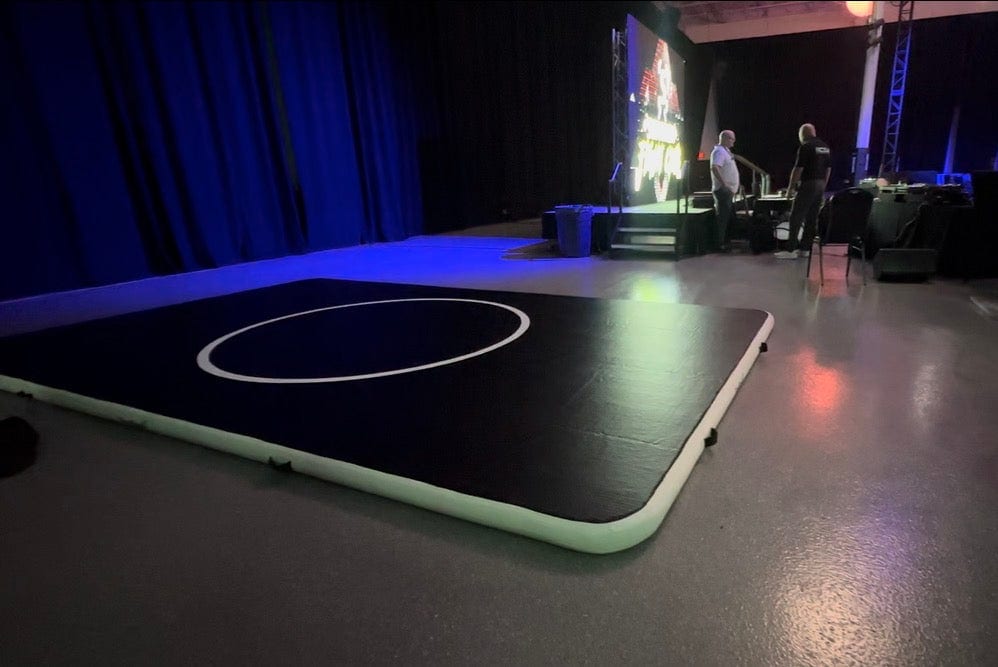
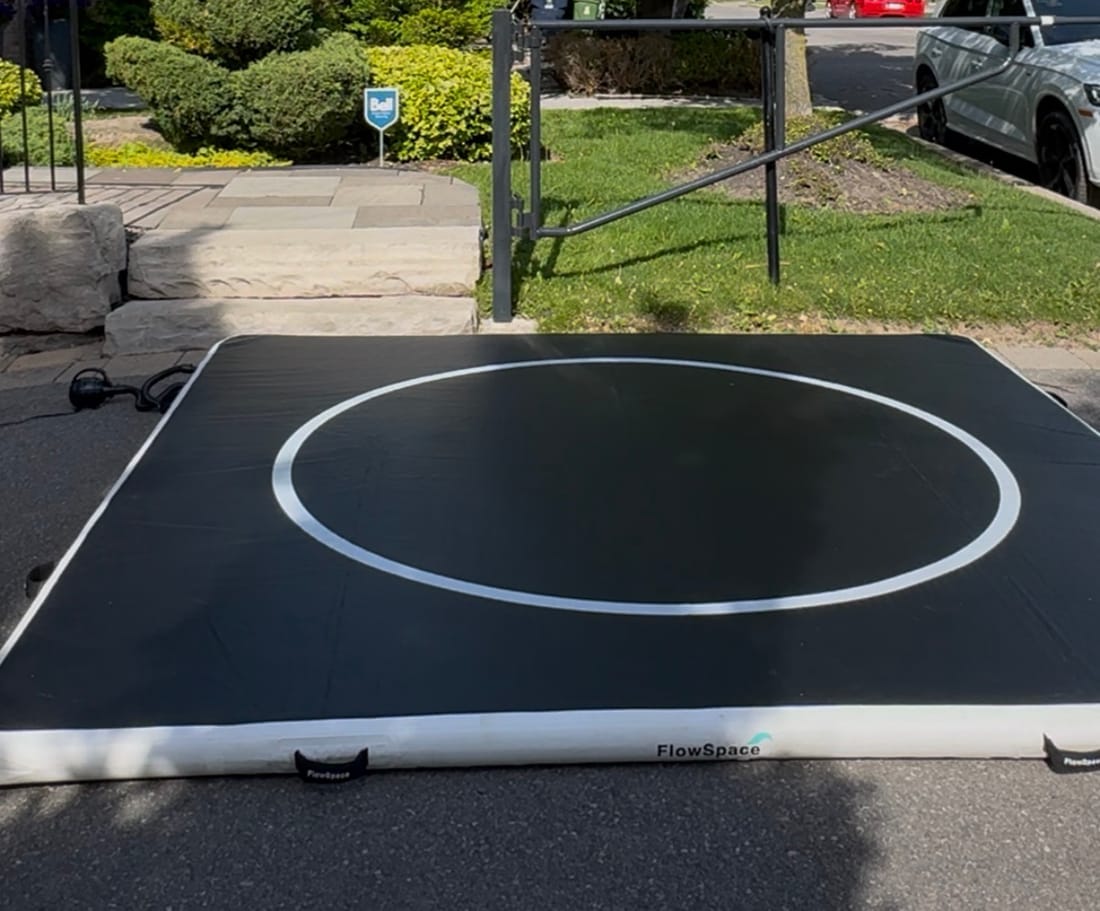
Hospitals need a firm, portable surface for the physical intervention skills their training programs require. FlowSpace Mats inflatable mats are the portable option: 4 inch drop-stitch mats that set up in a multipurpose room, deflate into a carry bag, and store in a closet. Foam roll-out and folding panel mats suit a dedicated training room.
Why do hospitals need training mats now?
Because hands-on practice is no longer optional for accredited hospitals. The Joint Commission standard HR.01.05.03 requires a hospital to provide workplace violence prevention training, education and resources at the time of hire, annually, and whenever the workplace violence prevention program changes. The required content explicitly includes de-escalation and intervention skills, and physical intervention techniques are named among them.
The scale of the problem is why the standard exists. The US Bureau of Labor Statistics recorded 41,960 nonfatal workplace violence cases requiring days away from work, job restriction or transfer in health care and social assistance across 2021 and 2022. That is 72.8 percent of all such cases in private industry, from one sector.
State law is moving in the same direction. Oregon Senate Bill 537, signed in July 2025, sets out workplace violence prevention requirements for hospitals, ambulatory surgical centers, home health agencies and hospice programs, including annual training, with requirements for health care employers taking effect on January 1, 2026. Other states have passed or are considering comparable measures.
A standard that names physical intervention techniques means somebody has to practice them on a surface that is safe to fall on. For most hospitals that surface has to appear in a room that is a cafeteria on Tuesday and a classroom on Wednesday.
- Joint Commission workplace violence prevention training requirements, explained by Crisis Prevention Institute
- US Bureau of Labor Statistics, Workplace Violence fact sheet, 2021 to 2022
- Oregon Senate Bill 537 alignment guide, Crisis Prevention Institute
What skills are practiced on the mat?
Hospital programs differ, and the physical curriculum depends which one a health system has adopted. Widely used programs in US health care include CPI Nonviolent Crisis Intervention, AVADE and MOAB. The list below describes the kinds of physical skill these programs commonly cover. It is not a description of any one curriculum, and none of these organizations endorses, certifies or is affiliated with FlowSpace Mats.
What the skills have in common is the reason a mat is involved at all: every one of them can put a staff member on the floor, either on purpose or by accident, and repetition is the only way they become reliable under stress.
- Disengagement from grabs, clothing pulls, hair pulls and chokes
- Escort holds and team control positions
- Restraint application, where a program includes it
- Decentralization and takedown techniques
- Ground defense and getting back to the feet
- Safe falling and breakfalls
Foam vs folding panel vs inflatable
Three formats are in use in hospital training rooms, and each of them is the right answer somewhere. Foam is the incumbent for good reasons: it needs no pump and it does not move underfoot. The question is not which is best, it is which fits the room you actually have.
| Consideration | Foam roll-out | Folding panel | Inflatable |
|---|---|---|---|
| Storage footprint | Rolls are bulky and heavy. Usually stored in the room where they are used. | Folds flat against a wall, but still occupies wall space permanently. | Deflates into a carry bag. A 10x10 packs to a 36x12x10 in box; the Pro to 36x12x14 in. |
| Moving between facilities | Difficult. Rolls are awkward to lift and usually need a van and two people. | Possible but heavy. Panels are rigid and do not stack compactly. | Built for it. The 10x10 is 64 lb packaged and the Pro 91 lb, each in a single bag. |
| Setup and teardown | Unroll and go. No power, no pump, nothing to fail. | Unfold and go. No power needed. | About three minutes to inflate with the included electric pump, and similar to pack down. |
| Surface and cleaning | Vinyl-covered foam. Seams and the roll interior can trap moisture. | Vinyl over foam panels, with hinge seams between sections. | Non-porous sealed PVC with no exposed absorbent core. Wipes down and air dries before storage. |
| Stability underfoot | The benchmark. Dense and completely static for standing work. | Stable, though panel edges can separate under heavy footwork. | Firm at pressure and pressure-adjustable. Standing work feels different from foam tatami. |
| Typical use | A dedicated training room that stays set up. | A room used for training often, where some wall storage is available. | A multipurpose room, a borrowed space, or training that travels between sites. |
Are inflatable mats stable enough?
For ground work, control drills, breakfalls and takedown practice, yes. A 4 inch drop-stitch mat gives a thick landing surface, which is the half of defensive tactics training that puts people on the floor hardest. Firmness is adjustable by pressure, so a department can set it softer for a breakfall session and firmer for control work.
Standing work is where the honest answer matters. A mat held firm by air pressure does not feel the same underfoot as dense foam tatami, and instructors who have taught on foam for years will notice it in the first five minutes. Most adapt quickly. Some prefer foam for standing drills and that is a legitimate preference, not a defect.
So the recommendation is to validate before committing: run one pilot session with your own instructors and your own curriculum, on the mat, before a department standardizes on it. Anyone selling you a training surface for staff safety should expect that question and should want you to ask it.
We make no impact-attenuation or surface-certification claim for these mats. We have not had them tested to ASTM F355 or any equivalent standard, and we will not imply otherwise. If your procurement process requires an independently tested impact figure, say so early and we will tell you plainly whether we can meet it.
What size mat does a hospital need?
Size follows class format rather than room size. The question to answer first is how many people are on the mat at once, not how big the room is.
A single pod is one pair working under an instructor, which is how most restraint and disengagement drills are run. A full class area lets several pairs drill at the same time without anybody rotating off. A continuous area suits a larger cohort or a session where the whole group moves together.
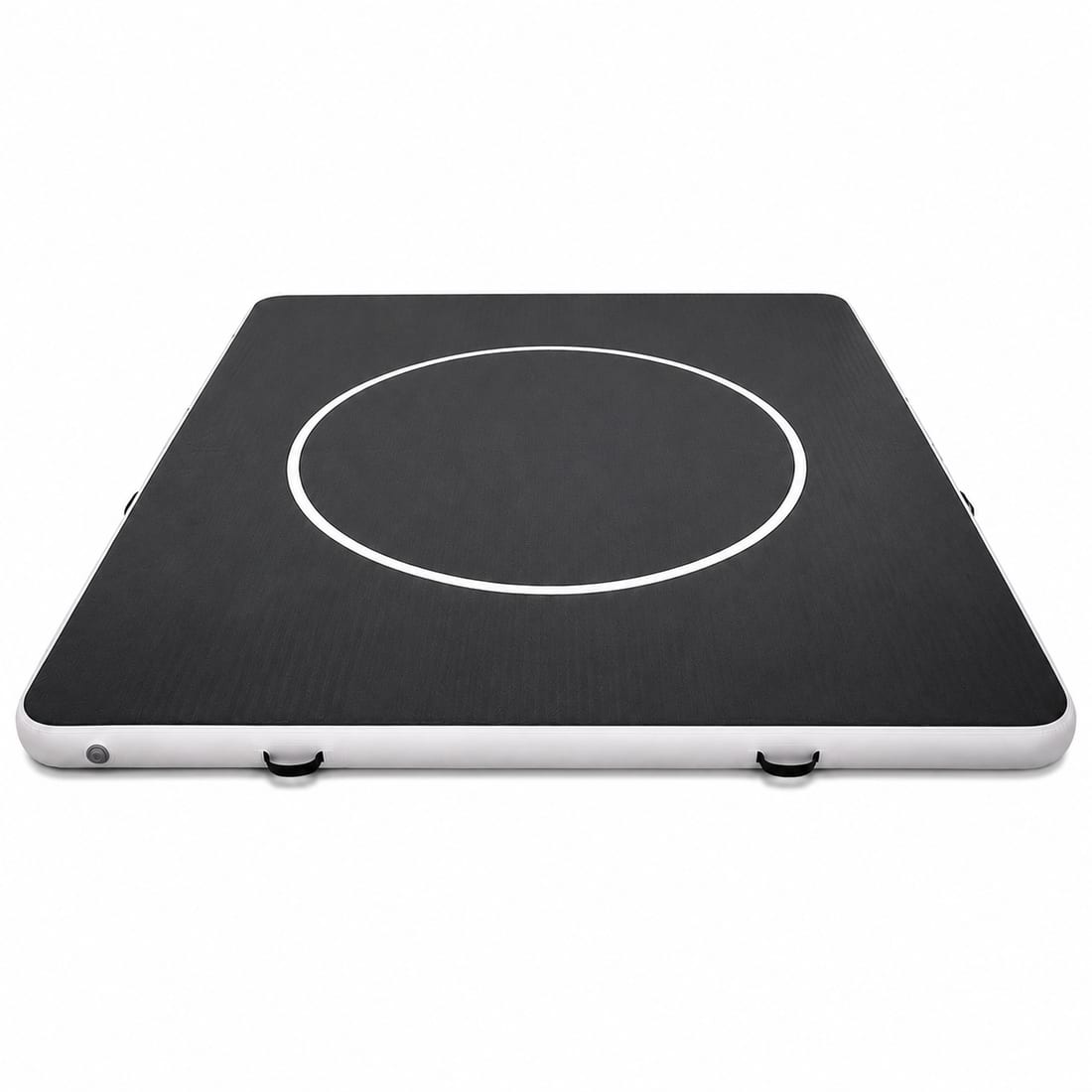
- Home FlowMat 10x10, 10 ft by 10 ft: one class pod, a single training pair group with room to finish a sequence.
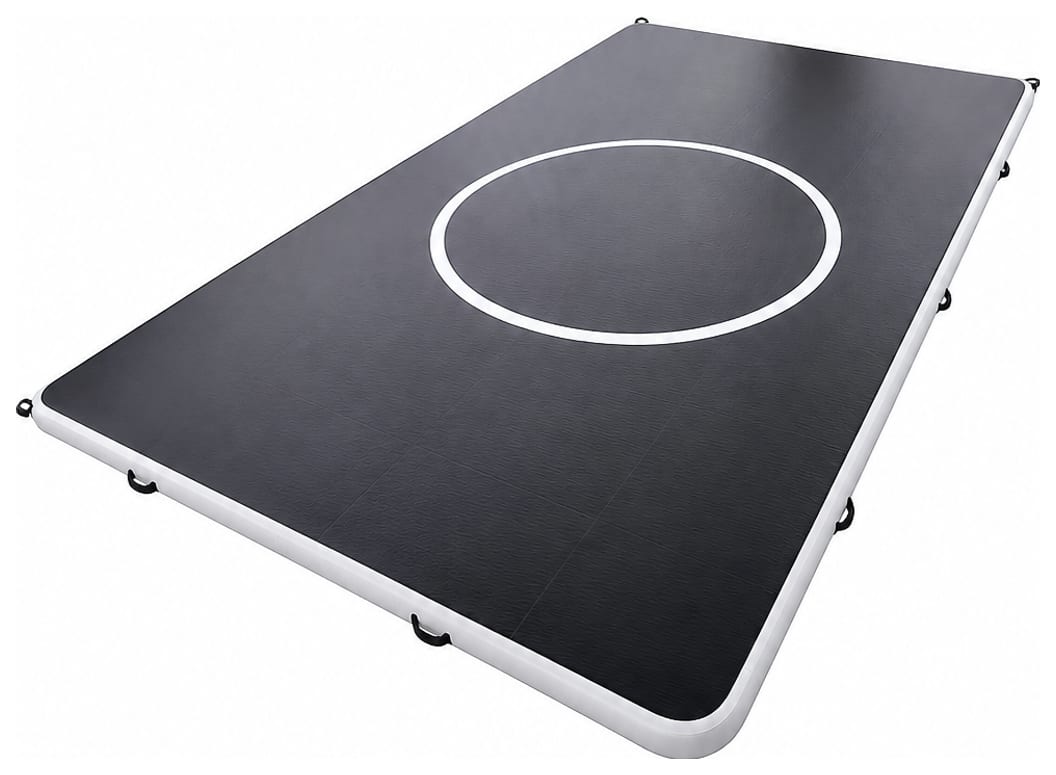
- Pro FlowMat 10x16, 10 ft by 16 ft: a full class area for partner drills with more than one pair working.
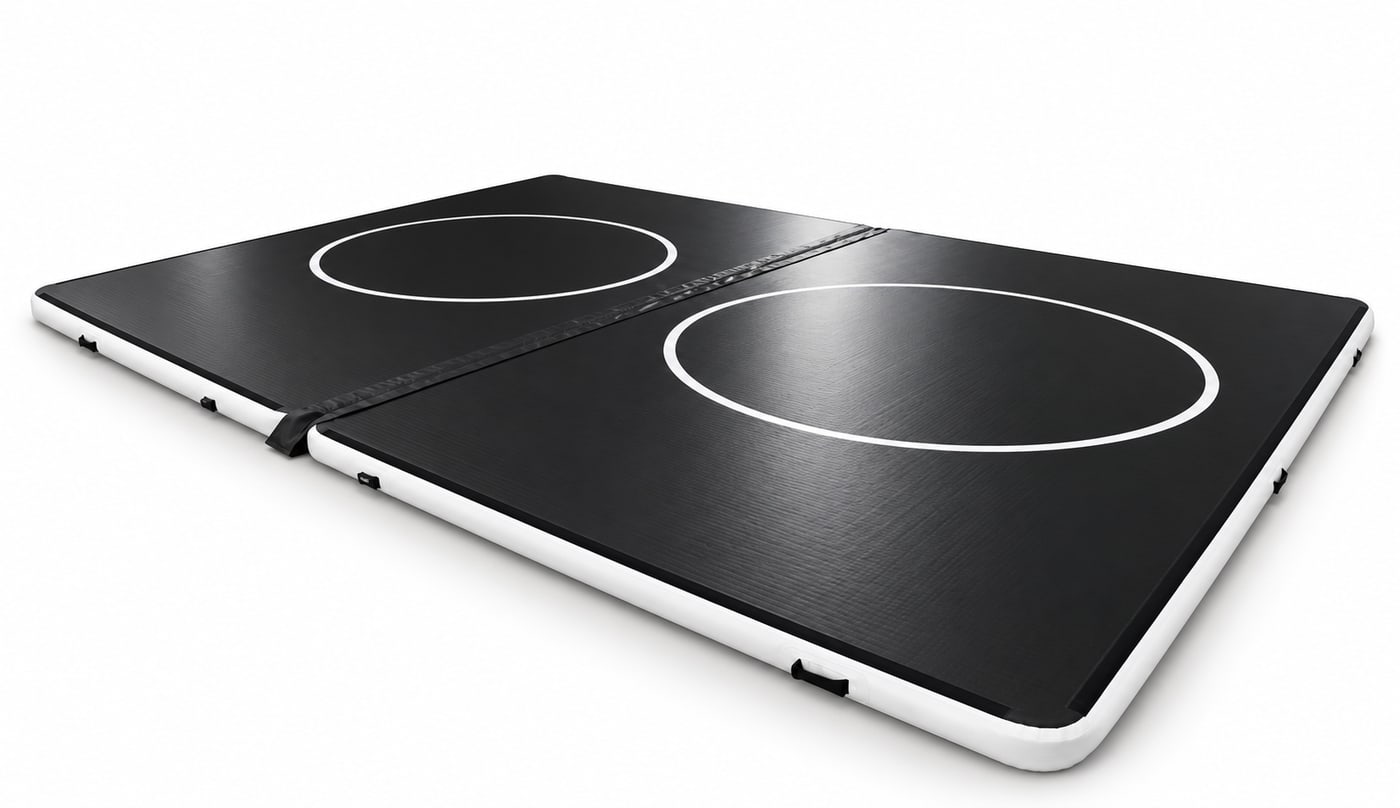
- Arena Bundle, two Pro mats joined to make 20 ft by 16 ft: a larger continuous area for a full cohort.
How do you clean mats in a hospital?
The surface is sealed PVC. It is non-porous, it has no exposed absorbent core, and there is no fabric cover and no foam interior for moisture to reach. That is the property that matters for a mat going back into a closet between classes: there is nowhere inside it for anything to soak in.
Between classes the routine is short. Clear any debris from the surface, apply a mat-safe cleaner as directed in the care guide that ships with the mat, let it dwell for the time that product specifies, wipe it down, and let the mat air dry fully before it is deflated and packed. Packing a damp mat into a bag is the one step that causes problems, and it is the easiest one to skip when a room is needed back.
We do not publish compatibility claims for specific hospital disinfectants. Infection prevention teams have their own approved product lists, and whether a given product is appropriate for this surface is a question for the care guide and for us directly, not something to infer from a web page. Ask us and we will give you a straight answer in writing.
How do hospitals buy training mats?
Not with a credit card at a checkout, usually. Institutional buying runs on documents, and the path is predictable once you have seen it: a formal written quote on letterhead with line items and a validity date, a completed W-9 and whatever vendor onboarding or supplier registration the health system uses, a purchase order raised against that quote, then delivery and an invoice on Net 30 terms.
None of that is unusual for us and none of it needs to slow the order down. Tell us the sizes and quantities you are costing, the name of the entity on the purchase order, and any forms your procurement team needs completed, and we will return the quote and the paperwork together.
US health systems have purchased these mats for staff training during 2026. We do not name customers on this page, and we will not give out a reference without that organization asking us to first.
Request a formal quote
Tell us what you are costing and we will send a written quote with line items, plus the W-9 and any vendor forms your procurement team needs. No prices are shown on this page because an institutional quote is a document, not a checkout.
Common questions
What size mat does one class need?
For one training pair working under an instructor, the Home FlowMat 10x10 at 10 ft by 10 ft is the usual choice. For several pairs drilling at once, the Pro FlowMat 10x16 gives a full class area, and two Pro mats joined make a 20 ft by 16 ft continuous area.
How long does setup take?
About three minutes to inflate with the included electric pump, and a similar time to deflate and pack down afterwards. That is short enough to set up and clear a multipurpose room inside the time a room is normally booked for.
Where does the mat go between sessions?
Deflated and in its carry bag, in a closet. A 10x10 packs into a 36x12x10 in box at 64 lb packaged, and the Pro into 36x12x14 in at 91 lb, so neither needs dedicated wall or floor space in the training room.
How is the mat cleaned between classes?
Clear debris, apply a mat-safe cleaner as directed in the care guide, let it dwell, wipe down, and let the surface air dry fully before packing. The surface is non-porous sealed PVC with no exposed absorbent core. We do not publish compatibility claims for specific hospital disinfectants, so ask us about a particular product.
Can we buy on a PO with Net 30 terms?
Yes. The usual path is a formal written quote, a W-9 and vendor onboarding, then a purchase order raised against the quote and an invoice on Net 30 terms. Request a formal quote and tell us what your procurement team needs.
Can we try the mats before we commit?
We recommend it. Standing work on an inflatable surface feels different from foam tatami, so run one pilot session with your own instructors and your own curriculum before committing a department. Ground work, breakfalls and takedown practice are what the 4 inch surface is best suited to.
Last checked: . Standards, statistics and specifications on this page were verified against the sources linked above.
Get Exclusive Training Tips & Deals
Join the FlowSpace community. Be first to know about drops.