
How a FlowSpace mat is made
A FlowSpace mat arrives in a bag and inflates into a training floor, which makes it easy to assume it is a big air mattress. It is not. Here is what actually goes into one, in the order it happens.
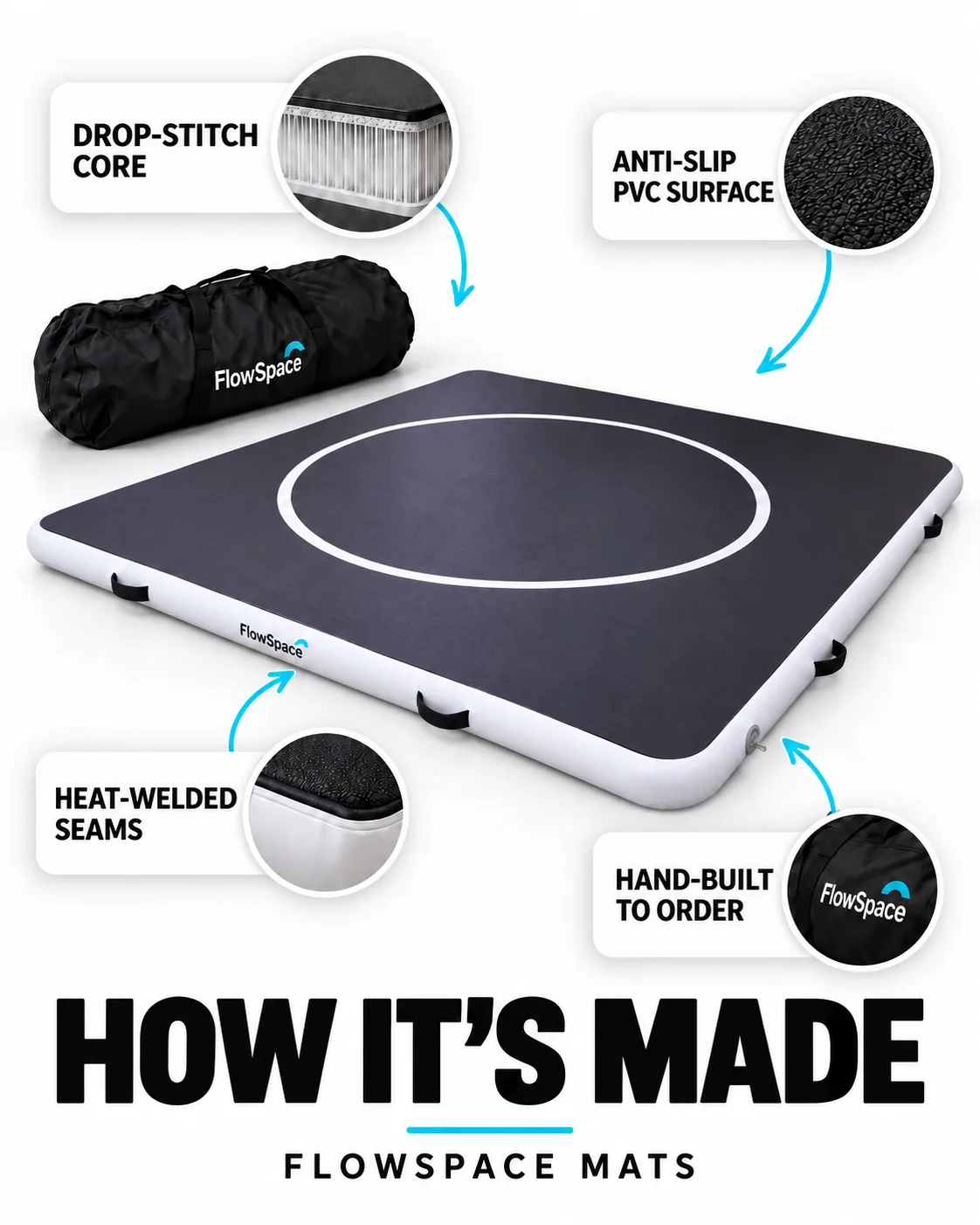
Step 1. The drop-stitch core
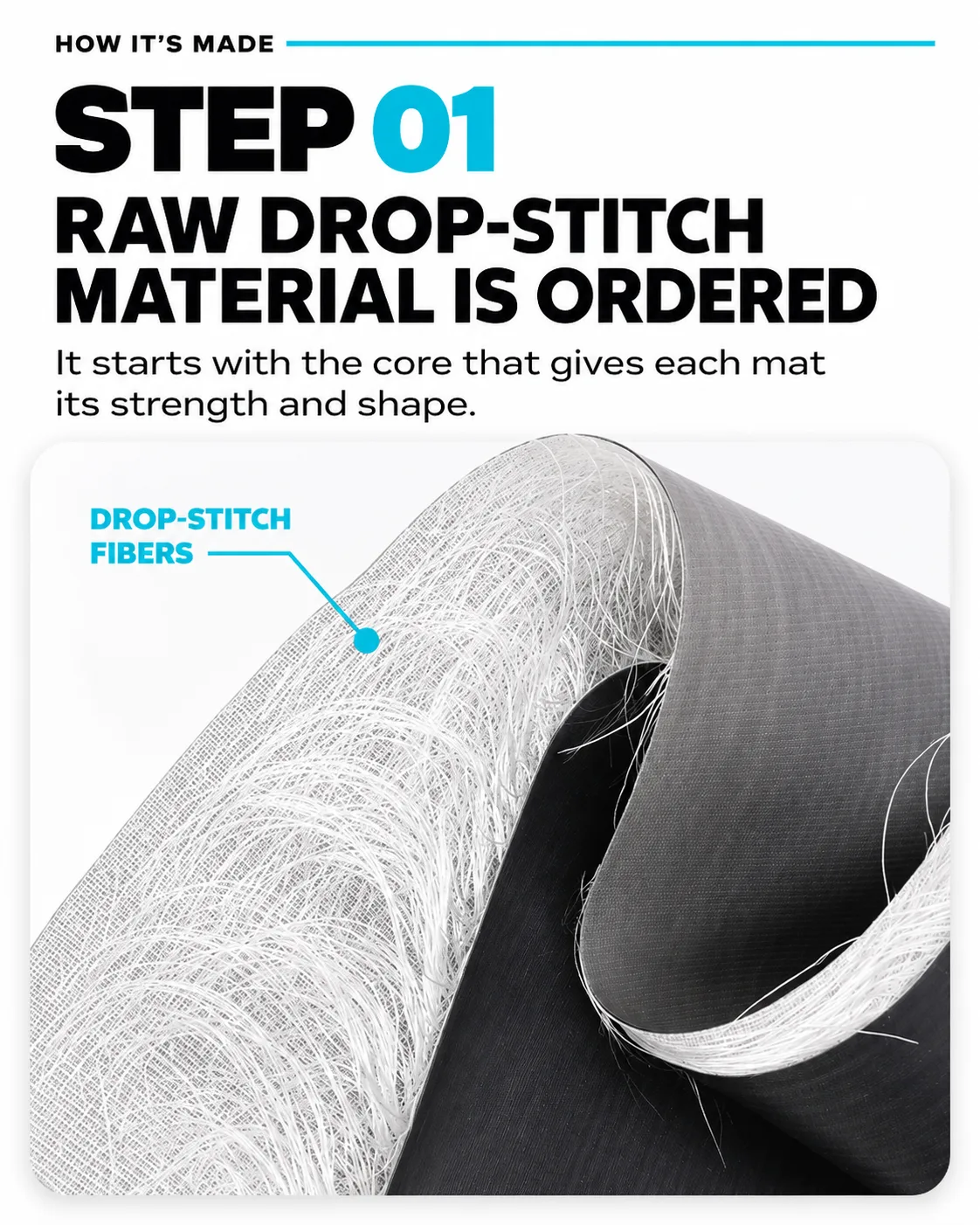
It starts with the core that gives each mat its strength and shape. Drop-stitch is two surfaces held together by thousands of fibres running between them. Inflate it and those fibres go tight, so instead of ballooning into a pillow the mat pulls flat and stays flat.
That is the whole reason a mat this light can be stood on, landed on and wrestled on. The fibres do the work, not the air pressure alone.
Step 2. Cut to size, then welded
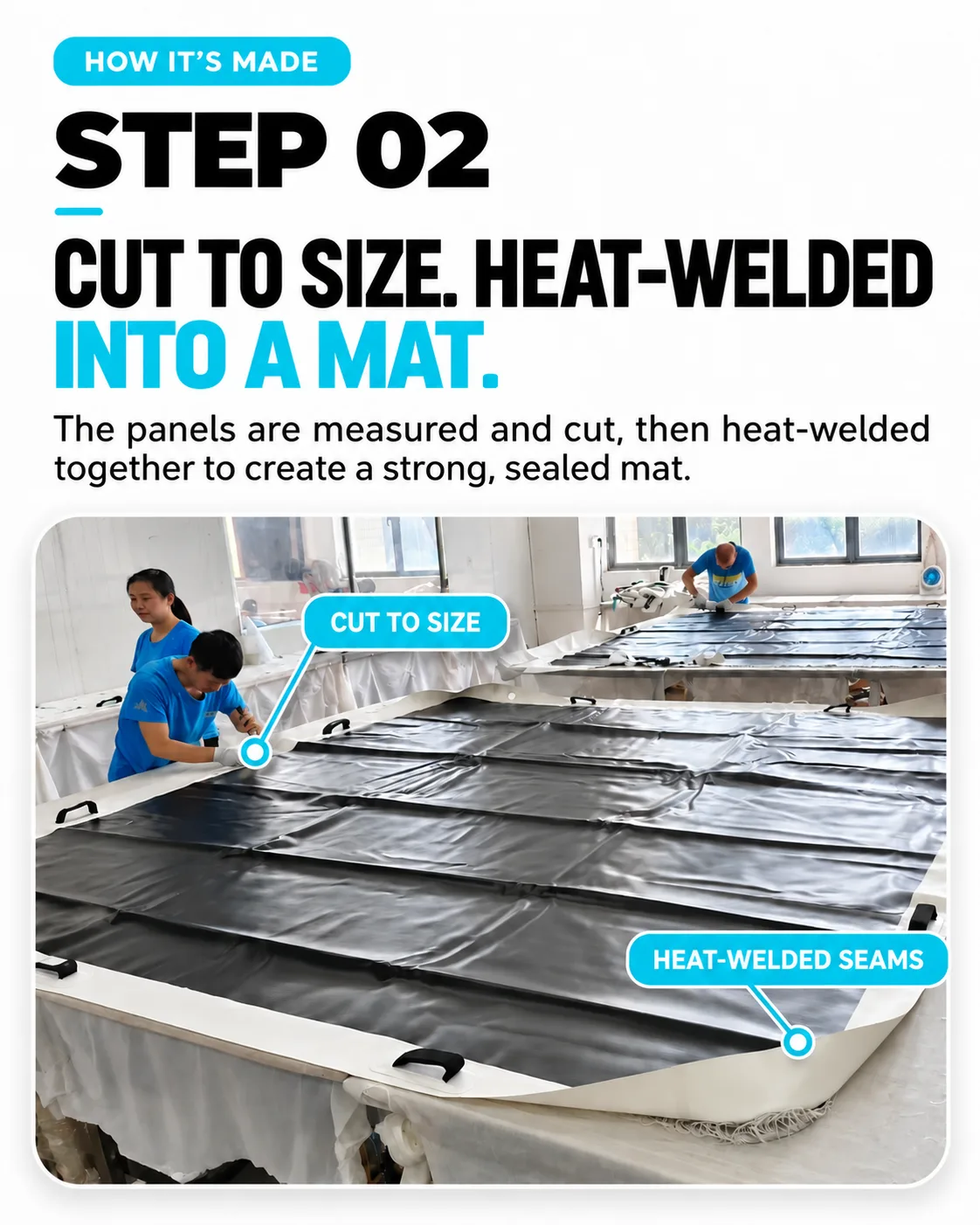
The panels are measured and cut, then heat-welded together into a sealed mat. Welding fuses the material itself rather than relying on adhesive between two layers, which is why the seams are not the first thing to go.
This is the step that is done by hand, mat by mat, which is also why each one takes the time it does.
Step 3. Inflated and tested
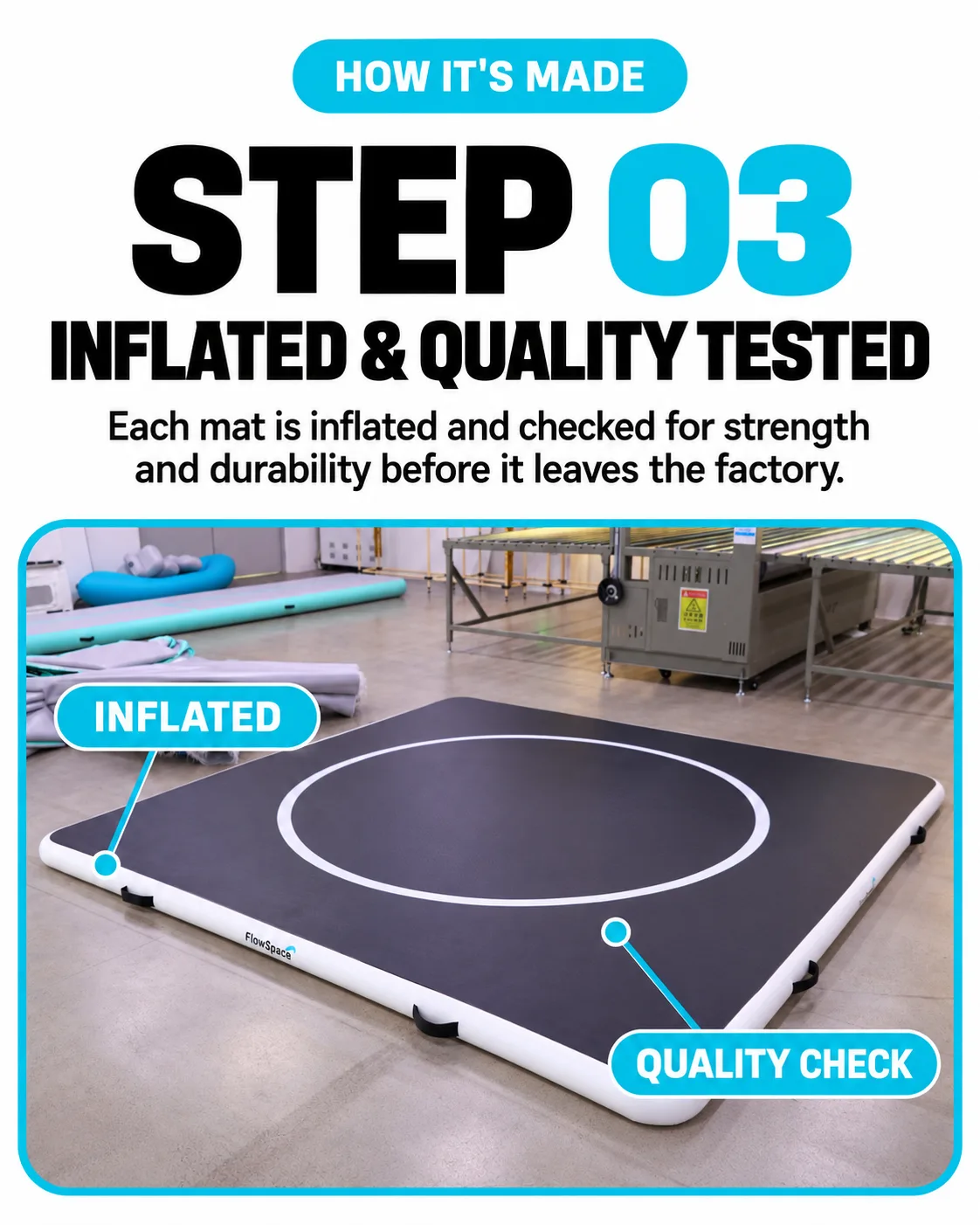
Every mat is inflated and checked for strength and durability before it leaves the factory. A mat that is going to fail at a seam fails here, on the floor of the building it was made in, rather than in somebody’s garage.
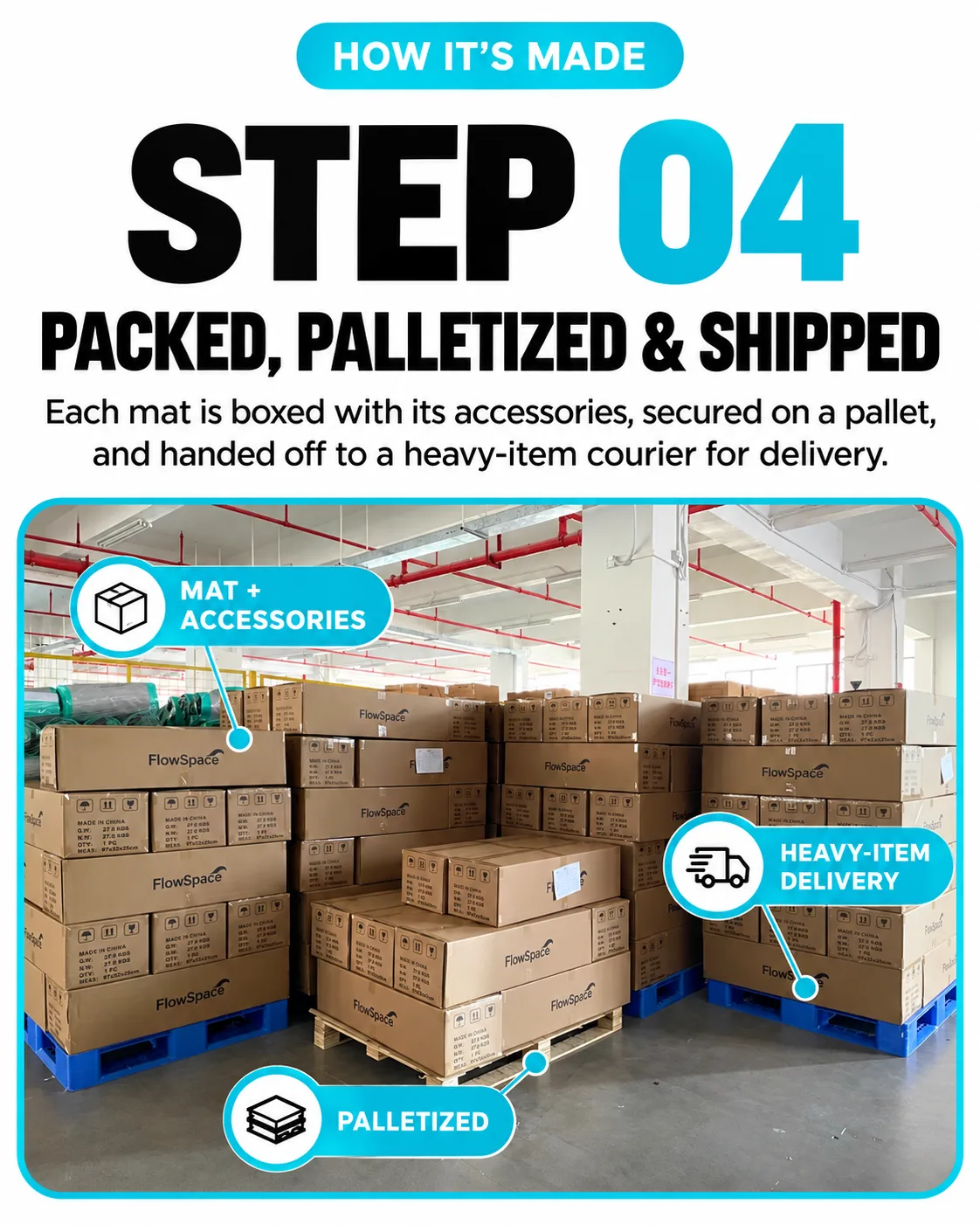
Step 4. Packed, palletised, shipped
Each mat is boxed with its accessories, secured on a pallet, and handed to a heavy-item courier. Mats are freight rather than parcels, which is why delivery is booked rather than simply dropped at a door.
Why it takes a few weeks
Nothing above happens to a mat sitting in a warehouse. Every mat is built to order, which is why the wait is 4 to 5 weeks rather than two days, and why the one that turns up is the one that was made for that order.
Get Exclusive Training Tips & Deals
Join the FlowSpace community. Be first to know about drops.